
If you’ve spent any time running Amazon ads, you’ve probably looked at ACOS.
And if you’ve relied on it too much, you’ve probably made the wrong decision at least once.
ACOS tells you how your ads are performing in isolation. TACOS tells you how your ads are impacting your entire business.
That difference matters more than most sellers realize.
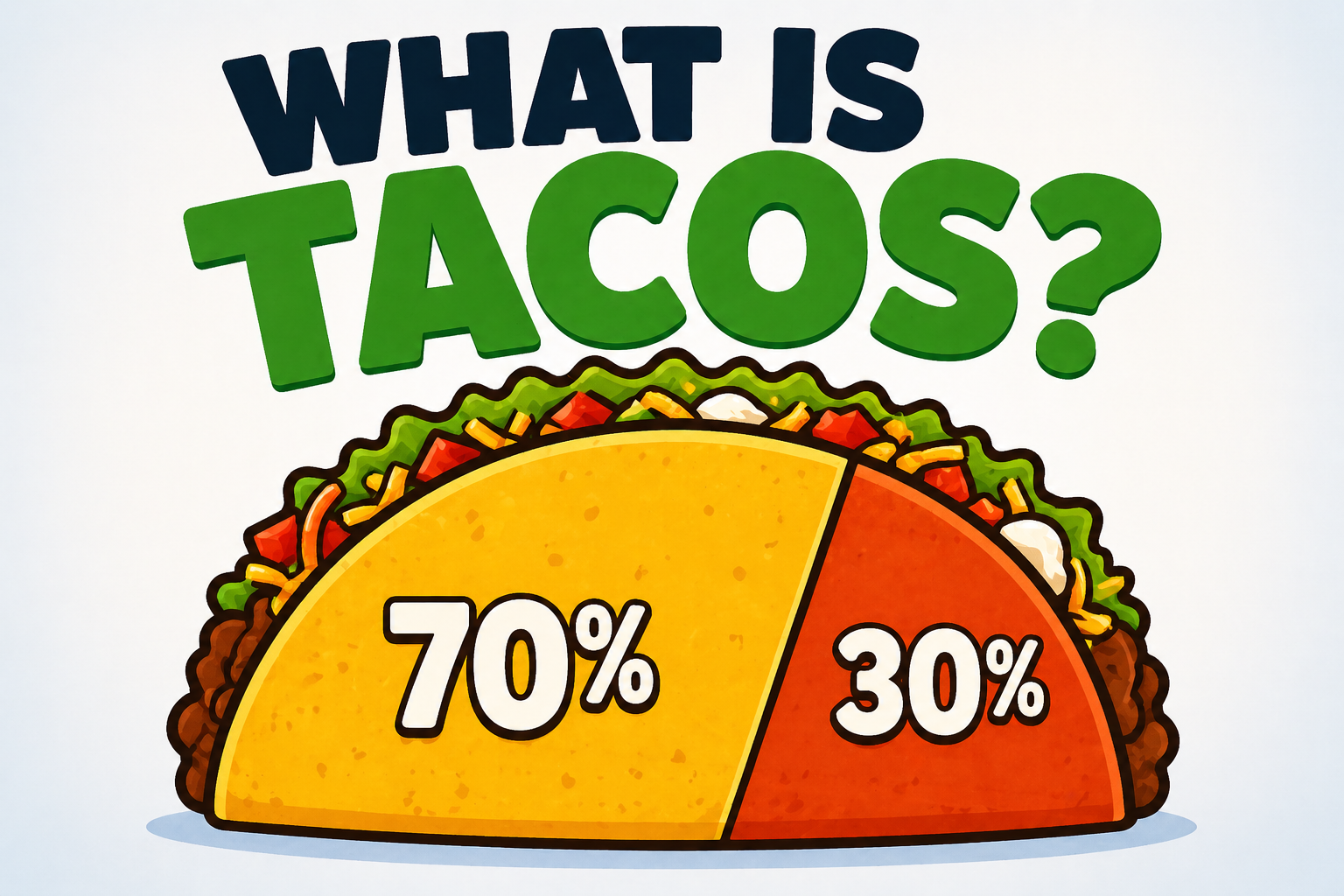
What Is TACOS?
TACOS stands for Total Advertising Cost of Sales.
Instead of only measuring ad performance, it looks at how your ad spend relates to your total revenue, including organic sales.
The Formula
That’s it.
But what it represents is much more important than how it’s calculated.
Why TACOS Exists (And Why ACOS Isn’t Enough)
ACOS only looks at:
- ad spend
- ad-generated sales
That’s useful, but incomplete.
Because ads don’t just generate direct sales. They also:
- improve organic ranking
- increase visibility
- drive repeat purchases
TACOS captures all of that.
The Difference Between ACOS and TACOS
Think of it like zoom levels.
ACOS is zoomed in.
TACOS is zoomed out.
One shows campaign efficiency. The other shows business impact.
What a “Good” TACOS Looks Like
There’s no universal number, but patterns matter more than the exact percentage.
A healthy TACOS typically:
- trends downward over time
- stabilizes as organic sales grow
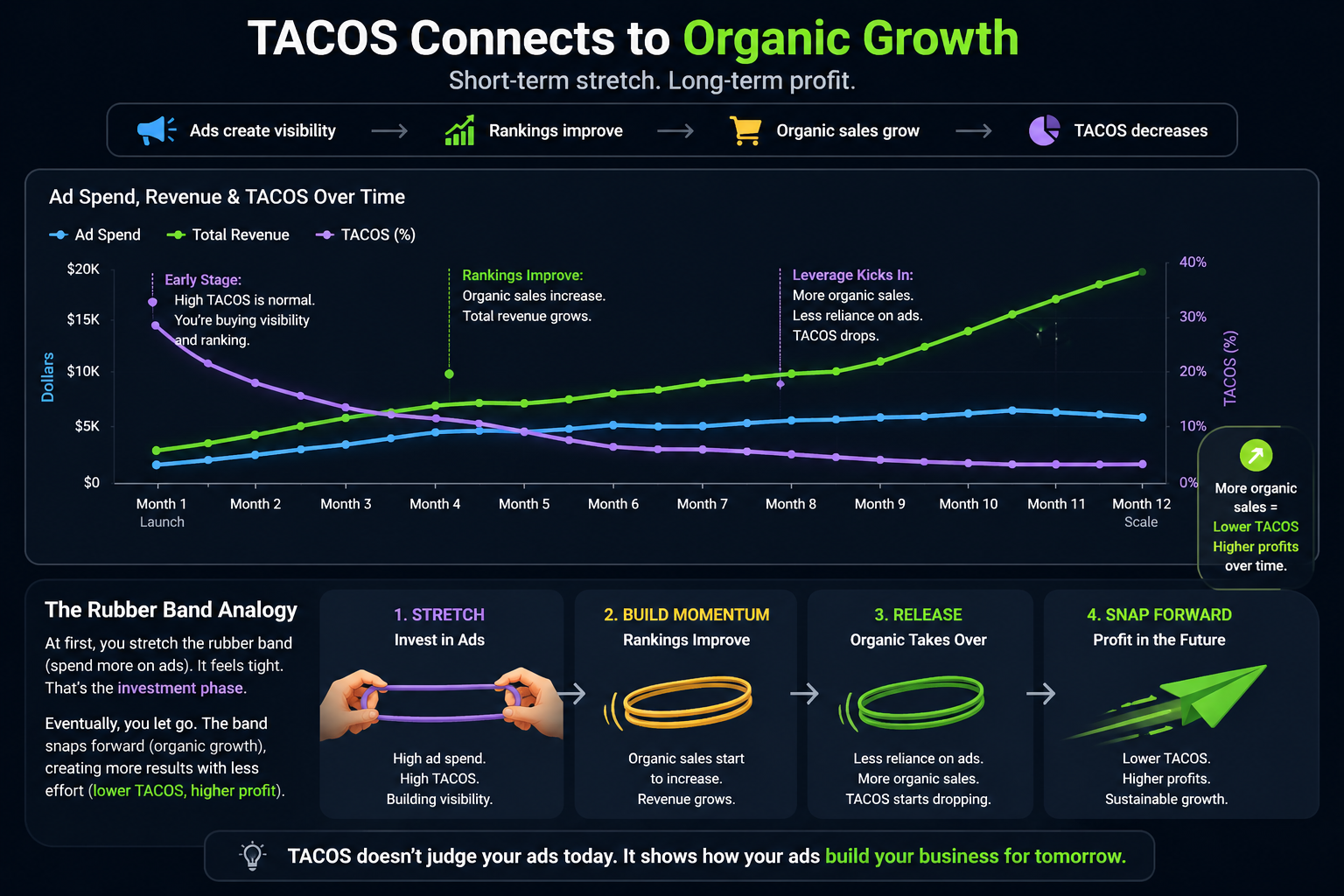
Early on, your TACOS might be high. That’s normal.
You’re paying for visibility.
Over time, if things are working, you should start seeing:
- more organic sales
- less reliance on ads
- improved margins
If TACOS stays flat or increases, something is off.
How TACOS Connects to Organic Growth
This is where TACOS becomes useful.
Let’s say you increase ad spend.
At first:
- ACOS might rise
- profits might shrink
But if your product starts ranking, you’ll see organic sales increase.
When that happens:
- total revenue grows
- TACOS drops
Even if ACOS stays the same.
When a High TACOS Is Actually a Good Sign
A high TACOS doesn’t always mean you’re losing money.
It can mean:
- you’re in launch phase
- you’re investing in ranking
- you’re entering a competitive market
The key is what happens next.
If your total revenue grows and TACOS starts to decline, you’re moving in the right direction.
If not, you’re just spending more without getting stronger.
When TACOS Becomes a Problem
TACOS becomes a concern when:
- it stays high with no growth
- it increases while revenue stays flat
- you rely on ads for most of your sales
That usually points to:
- weak listing conversion
- poor product-market fit
- or inefficient targeting
At that point, optimizing ads alone won’t fix the issue.
How to Actually Use TACOS
TACOS isn’t something you tweak daily.
It’s something you track over time.
Use it to answer:
- Are my ads helping me grow?
- Am I becoming less dependent on paid traffic?
- Is my business getting more efficient?
It gives you direction, not instructions.
The Relationship Between TACOS and Profit
This is where things come together.
If TACOS is dropping while revenue is increasing, you’re improving profitability.
If TACOS is rising and revenue isn’t keeping up, your margins are under pressure.
You don’t need perfect campaigns.
You need a system where:
- ads support growth
- organic sales take over
- and overall efficiency improves
Most Sellers Track the Wrong Thing
ACOS feels more actionable, so people focus on it.
But that leads to short-term thinking.
You end up:
- cutting ads too early
- limiting growth
- optimizing for efficiency instead of expansion
TACOS keeps you focused on the bigger picture.
Use ACOS to Optimize, Use TACOS to Decide
That’s the simplest way to think about it.
- ACOS → daily/weekly adjustments
- TACOS → long-term direction
When you combine both, you stop guessing.
You start understanding how your ads actually impact your business.
.png)