
If your Amazon business looks profitable on paper but your bank account says otherwise, you’re not alone.
Most sellers underestimate how much Amazon actually takes — from FBA fees to PPC ads and “quiet” costs like storage and returns.
The good news? Once you know how to calculate real profit (not just revenue minus product cost), you can finally make data-driven decisions — and stop guessing which listings actually make you money.
Why Profit Calculation Isn’t as Simple as You Think
When you sell on Amazon, you’re playing in a marketplace that’s designed to reward efficiency — but not necessarily transparency. The dashboard shows sales and revenue, but your true margin hides behind dozens of micro-fees that vary by category, size, and season.
Even experienced sellers can get caught by:
- Shifting referral fees between categories
- FBA storage surcharges during Q4
- Return processing fees (often higher on apparel and electronics)
- Advertising “creep” — when auto campaigns quietly eat your profits
Understanding how these stack up is the first step to reclaiming your margin.
Break Down the Math: What Really Eats Into Your Profit
1. Product Cost (Landed)
This is your total cost to get an item ready to sell — manufacturing, packaging, duties, and freight.
💡 Pro tip: Always calculate this per unit after freight and duties. Sellers who only track factory costs are underestimating by 10–20%.
2. Amazon Fees
- Referral Fee: Usually 8–15% depending on the category.
- FBA Fee: Covers picking, packing, and shipping — varies by size/weight.
- Storage Fee: Monthly, but jumps 3–5x in Q4.
- Returns & Disposal: Often ignored until they show up on your statement.
Together, these can take 30–40% of your sale price before you even look at ad spend.
3. Advertising Costs
PPC ads are crucial, but Amazon’s pay-to-play model means your ad-to-sale ratio matters more than impressions.
Track your ACOS (Ad Cost of Sale) and TACOS (Total ACOS) — high TACOS means your entire account is overdependent on paid traffic.
4. Hidden Costs
- Product photography, design, or enhanced content
- Refunds and replacements
- Prep center or software subscriptions
- Storage and inventory aging fees
When added up, these are often the silent killers of an otherwise “profitable” listing.
Use Our Free Calculator to Find Out Your Real Numbers
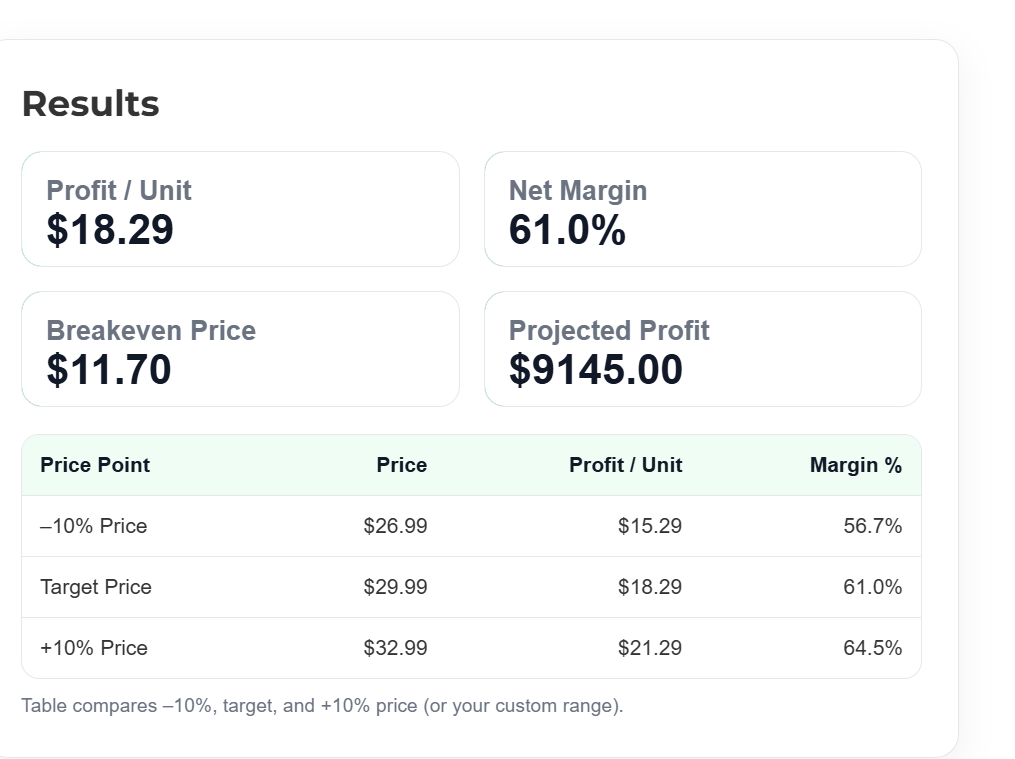
Instead of guessing, plug your actual numbers into our Amazon FBA Profit Calculator.
It breaks down every fee automatically and shows your true per-unit profit, margin, and breakeven price — so you can instantly see which products to scale or drop.
A Perspective Most Sellers Miss: Time as a Cost
Here’s what most blogs skip — your time is a cost.
If you spend 10 hours tweaking listings or chasing freight quotes for a product that earns $200/month, your hourly return is worse than flipping burgers.
Smart sellers prioritize listings that produce solid profits and minimal maintenance — the kind that compound without constant micromanagement.
.png)